Friday, 8 May 2020

Green, cool Brixton

Last year I had the opportunity to live a bit of the London life. I worked in the posh Chelsea area located in South West London, I stayed in Bounds Green, I jog in Battersea Park and I went to Brixton on the weekends. The Brixton area hosted the first wave of African-Caribbean, who now form part of the British-African-Caribbean community. Because of this, there are many African-Caribbean shops and many colours too. There is also the quirky Brixton market with an array of restaurants and cafes, and very tasty food, from all over the world. Even Portuguese food is prepared and sold in the Brixton market! I also attended a service in a church in Brixton. The minister was a woman of Nigerian origin and the co-minister was a woman of British origin. The women’s preach sound very ethical, eloquent and engaging to me. They also acknowledged my presence by asking my name, by singing a song and with clapping of hands at the end of the service. I felt very welcomed and I thought I would be happy to attend these services more often if I lived in Brixton. This also made the mass in the church close by my house in Portugal look obsolete. I was raised as a Catholic and played the organ and directed the choir for 17 years in this church. Then, I grew more and more disappointed with the machoism still implanted in the Catholic Church, where women cannot become priests, priests cannot marry, preaches do not make any parallelism between the Bible texts and the real life etc. Of course, there are also very intellectual and progressive clerics, who are a pleasure to listen and to read, but unfortunately this is not the rule and they hardly make to these little country churches in Portugal. I still go every now and then to the church for any special event but I long for something closer to the service I once attended at a Brixton church, in London.  

Friday, 17 April 2020

Grey sea and sky by J.M.W. Turner

The Shipwreck by J.M.W. Turner (Photo by Diana Feliciano)

I have been several times to the Tate Modern Museum in London but never visited the other Tate, the Tate Britain, until last year. I passed by and decided to enter. As soon as I was inside the museum I learnt there were guided visits to the collections and happily found out that one of those visits was to the collection of the great British painter William Turner. I felt so lucky!!! The Tate Britain hosts the largest collection of works by Turner, whose style is unmistakable. Themes painted by Turner include seascapes, countryside scenes, gothic cathedrals, landscape and history, fire and water. My favourites are the seascape paintings such as the Shipwreck, first exhibited in 1805. The other very popular painting I like a lot is Hannibal and his Army Crossing the Alps. Turner was a very rich man which allowed him to paint as he wanted and to be innovative. He was also a very eccentric person. On my first visit to Barnard Castle, where I now spend much of my time, I was told that he has been there and painted from the bridge across the River Tees. A good movie on the life of Turner is: "Mr. Turner" with Timothy Spall.

Thursday, 16 April 2020

Grey smoke from muirland burning


In one of my walks last year, I saw this scene of moorland burning in the North York Moors National Park. I have witnessed this many times in Scotland, before, but because I was at the time contributing to the land use section of the UK net-zero report by the CCC, this image shuddered me. Moorland burning is the planned burning of small areas of older heather, mostly undertaken by private Estate owners with the objective of regenerating the heather and of promoting blueberries essential to feed red grouse and deer. It is very sad that we hardly see any other wildlife (e.g. birds of prey, which should be abundant in an ecosystem full of grouse and deer. This is because private Estates manage these huge amounts of land to promote only a couple of species for the pleasure of rich hunters that fly from the big cities and from other countries to shoot them. It is also unacceptable that when all sectors of the economy have to set targets to become greenhouse gas neutral by 2050, or even before, private Estate owners are not presenting alternative management options in moorland areas. To stop carbon dioxide (CO2) emissions resulting from heather burning and the associated damage of blanket bogs, which are very important reservoirs of carbon, is essential to achieve several sustainable development goals (SDGs). A common excuse from managers is that burnings are controlled and do not damage blanket bogs but two questions are posed: Is this really checked and monitored by Defra and/or Natural England? Why does heather/burning continue only for the pleasure of a few, who also add to the carbon emissions budget of this land use by flying to these places for shooting? A more climate smart management practice is required. This could be to let native trees and vegetation to thrive, as this would conserve the peat and sequester carbon, and contribute to the net zero targets. Landowners could claim subsidies if they could prove they are providing ecosystem services such as climate change mitigation and adaptation, water conservation, and biodiversity.

Friday, 27 March 2020

Green Rio Sizandro

The Eco-Caminho of Sizandro (Portugal) is a trail that can be done by bike or walking. One section starts in the city of Torres Vedras and it finishes in the firth of river Sizandro (Foz do Sizandro), totalising 18km distance. There is also a variation that leads to Santa Cruz (21km), a popular holiday spot in the Portuguese Atlantic coast. The trail breaks in between agricultural fields of fruits and vegetables and as it accompanies the margins of the river Sizandro, the difficulty level is low. It also passes by several forts of the Lines of Torres Vedras, built during the Peninsular war with the objective of defending Lisbon from the French troops. The lines of forts were named after the city of Torres Vedras and their construction was supervised by the commander of the British troops, Arthur Wellesley, 1st Duke of Wellington. The eco-caminho passes through several interesting and authentic villages such as Ribeira de Pedrulhos, Ponte de Rol, Bordinheira, Aranha...I do this trail very often on my all terrain "Specialized" bike and I enjoy the views, the birds singing, the Atlantic. However, it deeply saddens me the way that farmers, walkers, fishermen and others treat the land and the river, with many litter left behind, mainly plastic litter. There seems to be no respect for nature and no awareness on how harmful this is for animals, ecosystems and human life.

White Maroon Bells

Apparently, this is one of the best views in the US. These two sharp mountains, still covered in snow in June, are the Maroon Bells and the photo is taken from the Maroon Creek Valley. It would have been very nice to climb these mountains, but a plaque at the visitor centre read that even experienced climbers find this climb extremely difficult. The Maroon Bells are two peaks above 4,000 meters which are located in the Maroon Bells-Snowmass Wilderness of the White River National Forest. So, on my own but together with the masses, I hiked from the Maroon Lake to the Crater Lake. In the Crater Lakes the masses stopped and enjoyed the views, but this did not satisfy me. So, I went a further into the wild. I only met an old couple of backpackers after passing the Crater Lake. This moment was inspiring for me as I saw that at their age they were still walking and camping outdoors. They explained me how to scare a mountain lion if I ever would see one: to stand tall and raise the arms overhead in order to look as big and intimidating as possible. However, some days before, someone else told me that if I ever saw a mountain lion that would have been already too late...I did not, though, not even a brown bear, which apparently is much less dangerous than a mountain lion. I passed by an elk without knowing it was one and this could have been dangerous as elks can charge, especially if they have calves with them.

Sunday, 31 March 2019

Green, blue and rocky around Dunkeld


A useful climbing spot south of Aberdeen is Dunkeld in Perthshire.  Here we can find the obvious outcrops near the main road, but also those more hidden and secretive, which involve some walking through the woods to find it. Dunkeld is separated from Birnam by the river Tay and the Birnam wood is mentioned in Macbeth, one of the most well known Shakespeare's tragedy. Dunkeld is very picturesque and it has a XIII century cathedral which is worth a visit.

Grey in Beinn a' Bhùird

Some endurance is needed to do this climb. It is not for the climb itself but for the full day before, during and after the climb. Leaving Aberdeen at around 10am, parking the car at Invercauld Estate, get on the bike up the valley with the camping and climbing gear on the back, put the tent up in the fairy valley, eat and get some water in the stream, get again on the bike with the climbing gear on the back, lock the bikes, hike up the mountain, look up for the climbing route, multi-pitch climbing, going down the mountain, get on the bikes, arrive to the tent, sleep. The only feasible activity for the following day after packing everything and getting on the bikes down the valley was to drive to Linn of Dee and swim.

Nab Crags in blue


The Lake District is full of little pretty places. By going away from the main roads and the main lakes the bustling gives place to the silence of the valleys. The Lakes are a handy region to have close by, either to climb, hike or sailing. The other temptation of the Lakes is its several country pubs. These are cosy and warm in the winter, always with the fire on. In the summer they have tables "al fresco" and the food tastes even better.

Tuesday, 25 September 2018

Imponent golden Bowes Museum

The Museum is in the market town of Barnard Castle, County Durham situated in the heart of the Pennines in North East England. The town is just off the A66, 20 minutes by car from Scotch Corner (A1), 40 minutes from Penrith (M6) and 40 minutes from Durham Tees Valley Airport. Interesting place for a wandering around and be inspired.

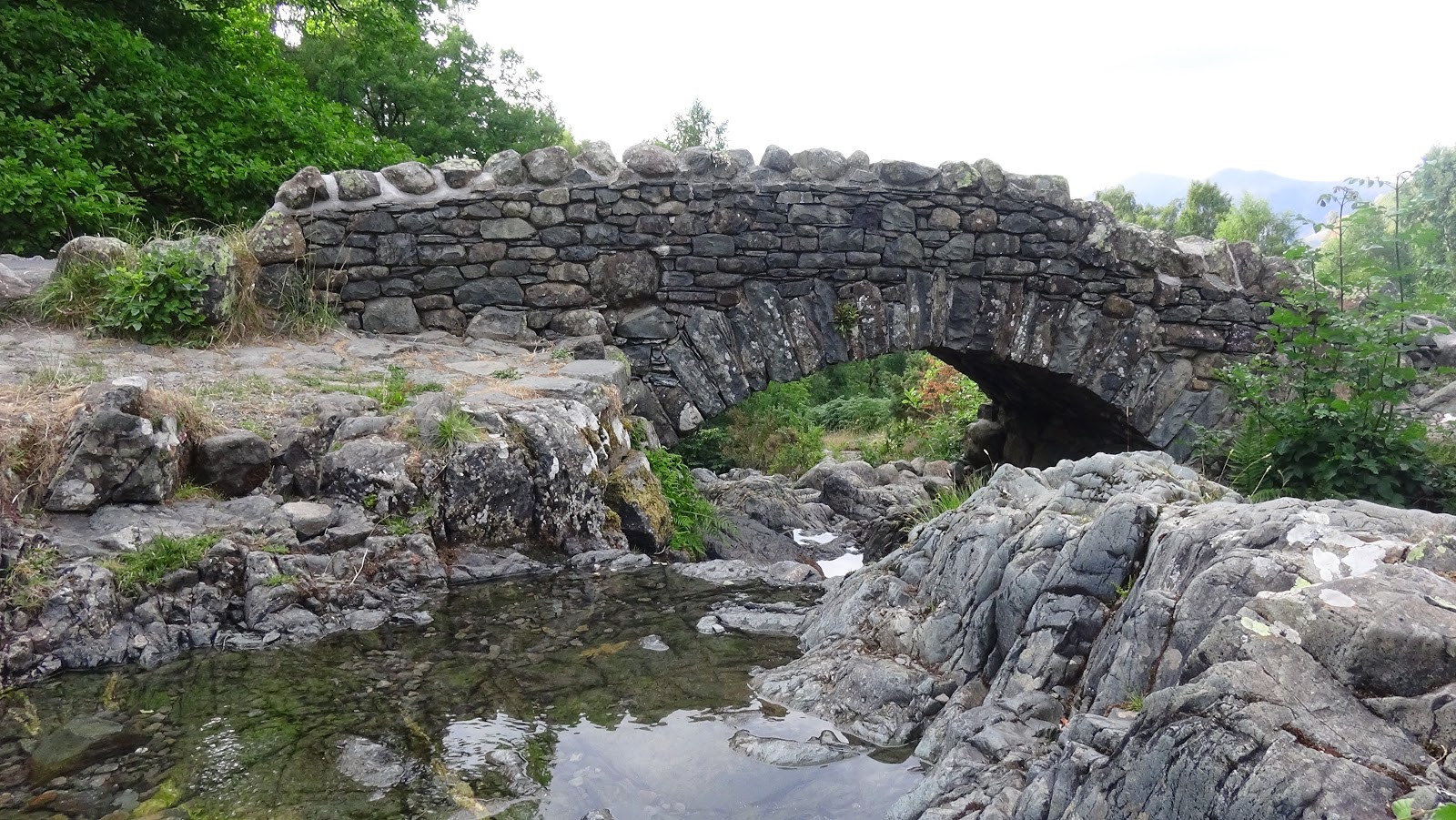
Grey stone bridge

This is the Ashness Bridge, which is a traditional stone-built bridge on the single-track road from the Borrowdale road (B5289) to Watendlah in the Lake District. This point is famous for being a good viewpoint across Borrowdale  towards Skiddaw. Nice green pools for a refreshing paddle.


Blue ocean in Gruinard Bay

"Gruinard Bay has three stunning, pink sand beaches from the Torridon rocks. From Gruinard Bay there are wonderful views across island studded waters to the Coigach Hills.  The area is very interesting from a geological viewpoint and many unusual stones can be found near the rocks and shoreline. The beach offers spectacular views of An Teallach and the northern Highlands." (Source: https://www.visitscotland.com/info/towns-villages/gruinard-bay-p314331)


Great climbing spot. In a hot day the sea and the spring are just there for an after climbing dive.

Saturday, 28 July 2018

Green Holy Isle

To arrive to the Holy Isle we have to catch a small boat at Lamlash Bay, in Arran. The boat takes only a maximum of 10 people but we were only 4 to take the last opportunity of the day to go there. At arrival we were welcomed by a nice German/Dutch resident (or volunteer) of the Budhist Community, which runs the Centre for World Peace and Health, who told us what were the attractions of the island. And the only thing to do was just going up and down the hill and around the island, while seeing the different painted figures of Budha. There was also the caves where the hermit St Molaise lived in the 6th century. The visit has to finish at 4pm, which is when the small ferry boat comes back to pick the single day visitors. While waiting, we fed a cereal bar to a couple of chaffinches and a blackbird and I visited the organic allotment maintained by the community. Ah, and I went for a swim. The water was quite warm to my surprise! 

Yellow and warm sunset in Cir Mhor

Nice walk through Glen Rosa until reaching the bottom of Cir Mhor. Good rock for climbing. Pleasant and smooth climbing with a great view over Arran at the top.


"Cir Mhor (Big Comb) is the last of the Corbett peaks of Arran and sits at 798m high. The name comes from the peaks resemblance to a cockscomb. Although not the highest peak in the range, Cir Mhor is justly described as the finest peak in the range. It forms, roughly, a triangular pyramid shape that faces one side towards Glen Iorsa, another to Glen Rosa and the third to Glen Sannox. Cir Mhor provides some of the best rock climbing on the Island." (In: https://www.summitpost.org/the-isle-of-arran/458606)

Friday, 27 July 2018

Blue sky and sea at Sheigra

This summer is being fantastic. And when the summer is like this in the west coast of Scotland, there is hardly any other beautiful place in the world. Fortunately for me, who likes travelling the world, the weather is hardly fantastic in Scotland and this summer has been only an exception. After a busy winter, spending few days in Sheigra was recharging. There is a nice beach, good climbing in the sea cliffs and a free site to camp!

Blue and red jackets

I sometimes think that if I reach my 70s, and with relative good health, I will be ready to travel around the world in cruises, as many old people do because it is an easy way of seeing the world with everything arranged for you. I just cannot stand the idea of travelling in a cruise but deeply believed, until very recently, that in my 70s I would have a different opinion about it. Some weeks ago, however, I was climbing Sgurr Alasdair in Skye and came across a group of over 70s climbing the Cioch. I have changed my mind. I will definitely pass the cruises in my 70s if I can!

Also grey sky in the South of Africa

I want to go back to South Africa. This first trip to the country was only a recognition trip. I did not travel  much around. I paddled in the Indian ocean and found out the water was as cold as the Atlantic ocean that bathes Cambelas, and that, similarly, the beach also get lots of plastic litter. I spent my weekend looking at the ocean from my room in a B&B located in the first line sea view. One night, after coming late from having dinner down town I met the only other host of the B&B I was staying, a guy from Swaziland. We went for dinner the following night and I learned so much about this small monarchy stuck between South Africa and Mozambique and about his refined taste for classical music. Unlikely but pleasant meetings usually happen when one travel alone.

The grey skies of Galicia

When I was 15 years old a read the book Diario de um Mago (The Pilgrimage) from Paulo Coelho, which was an inspiration at that age. The author walked the French way to Santiago de Compostela during six weeks and relates his experiences of self-discovery during the more than 1000km. Since then, I always wanted to walk the way as well. And in fact, throughout the years I have done bits of the Northern way and the French way, and I have visited Santiago and its imposing cathedral. Last April, by chance, all the stars aligned for me to do one of the Portuguese ways to Santiago with three colleagues. But I haven't walk though, I cycled, and I did not go for self-discovery but to appreciate the scenery and enjoy the experience. It took us 3.5 days to cycle from Porto to Santiago (~230km). We slept in Ponte de Lima, Redondela and Padron and we soaked to the bones in the second day as it rained and haled as if we were in Scotland (but we were in Galicia!). Cycling the Portuguese way was not peanuts, especially going up Serra da Labruja, in which we almost had to carry the bikes on our backs. But the landscape was always surprisingly refreshing and picturesque and it was interesting to see and talk to so many people walking the way. Arriving at the main square at Santiago, in front of the cathedral brought me an enormous sense of achievement, and the mysticism that I lacked during the way appeared in full power. 

Thursday, 19 July 2018

Blue Spring gentians

The presence of unusual artic-alpine plant species in the Upper Teesdale nudges me to walk about two miles along the river Tee in the beginning of Spring to witness the flowering of the Spring gentians. What makes this place favourable to the gentians is the rocky outcrops of unaltered limestone, an upland setting which retains harsh climate, and unfavourable mineral content of soils to the growing of grasses that could compete with these rare flowers. Much of Teesdale has been designated as a protected conservation area.

Saturday, 7 April 2018

Green and grey High Cup Nick


"This dramatic place is traditionally referred to as High Cup Nick, although rather intriguingly some old maps label it is as Eagle's Chair suggesting and eyrie probably existed here in times past. (...) The long symmetrical escarpments of dark dolerite at the rim of the valley are a result of the Whin Sill outcropping on either side of the valley. The whinstone rocks have then been eroded and weathered into columnar pillars, often producing a pleated effect in the play of light and shade." In The North Pennines - Landscape and Legend by Iain Brown. 

White milk and dark coffee


This is the best of field work: To seat down with people, to chat even if this means only to exchange names and laugh with each other, and taste what people want to offer you. With them I drank delicious raw milk from the local cows as well as coffee with salt, ate enset which is the fermented and roasted stem of false banana, and snacked roasted barley.

Playing with colours


These days I call myself not an interdisciplinary researcher, not a transdisciplinary researcher but an undisciplinary researcher. This means to be problem-based, interactive and involving strong forms of collaboration and partnership. While my colleagues where undertaking interviews with farmers in their local language I was finding out more about the children of the village. We exchanged our names, I taught them colours in English and they taught me several words in their own language. All is possible when we are undisciplinary.

Green Dufton Pike


Dufton is a small village with beautiful stone houses which is a staging post on the route of the Pennine Way. Behind the village the Dufton Pike rises steeply to the sky like an old volcano ready to become active again. Dufton Pike, together with Murton Pike and Knock Pike have been called the sentinels overlooking the eastern fringes of the Eden valley. Having a drink at the Stag Inn after the walk always guarantee an amusing conversation with the locals.

White stone in Montejunto


In 2017 and beginning of 2018 I started to investigate outdoor climbing sites in Portugal.  There is some potential it seems. Most of the sites are prepared for sports climbing but with some imagination trad climbing is also possible. In Montejunto the rock is white (limestone), the vegetation is Mediterranean and the view is stunning. In Casal Pianos, the rock is dark (basalt), the sea is the canvas, the cracks are vertical and using legs and knees to climb is a must. Cascais - Guia, is where everybody goes. The climbing is located in the sea cliffs (limestone), with the sun available until sunset. In Sintra, some routes take us all the way up to Castelo dos Mouros with a beautiful view over the Natural Park and the sea. The rock adherence (granite) is beautiful. Peniche is, unfortunately, full of litter left by Sunday visitors, but maybe if this problem is sorted out there will be some fun in climbing here in the future. The rock is granite and right next to the sea. 

Sunday, 11 February 2018

Colourfoul miner's paintings

Picture (Tom Lamb- Testing for Gas) from the book Shifts of Light - Mining Art in the Great Northern Coalfield (Robert McManners & Gillian Wales

"From the early nineteenth century coal mining was to dominate the North East of England for one hundred and fifty years. It provided employment, determined townscapes and population distribution, created hardships, dominated skylines but above all spawned communities. These tightly-knit mining fraternities provided the miner with all his basic needs. Historically the miner has always felt the need to express himself both politically and creatively. (...) This took many forms - a pride in the size of a leek, the speed of a whippet, the flight of a pigeon, the beauty of a chrysanthemum, the sound of a brass band, the recitation of a verse, the writing of a play or latterly the painting of a picture. The resulting body of art produced in the Great Northern Coalfield is as fascinating as it is diverse."

The Art Mining Gallery in Bishop Auckland explores working life in the coalmines through original artefacts and artwork from prominent mining artists. It is very well worth a visit.
 

Purple "Our moon" in the lumiere


In November 2017 the light festival (Lumiere Durham) came to Durham again. Artists from around the world illuminated the city with a series of light installations. It was interesting to see all the different installations but slightly disappointing that the crowds had to follow the designated paths and had to behave like  sheep in a herd. Therefore, the most pleasant time was spent in the church of Our Lady of Mercy and St Godric's, which offered tea and cake for free, talking with two old ladies from Durham.

"Our moon" (Hannah Fox) - Using motion capture techniques similar to a Hollywood Blockbuster, 80 Durham residents’ unique facial expressions were digitally captured and transferred over to drive the drawn animation of Our Moon. Four Moons were created from the residents of Durham; childhood, youth, maturity, wisdom. Each evening of Lumiere Durham 2017 a different moon watched over the city and its people.


Transparent ice cores at the British Antarctica Survey


"Ice cores are cylinders of ice drilled out of an ice sheet or glacier. Most ice core records come from Antarctica and Greenland, and the longest ice cores extend to 3km in depth. The oldest continuous ice core records to date extend 123,000 years in Greenland and 800,000 years in Antarctica. Ice cores contain information about past temperature, and about many other aspects of the environment. Crucially, the ice encloses small bubbles of air that contain a sample of the atmosphere – from these it is possible to measure directly the past concentration of gases (including carbon dioxide and methane) in the atmosphere. Direct and continuous measurements of carbon dioxide (CO2) in the atmosphere extend back only to the 1950s. Ice core measurements allow us to extend this way back into the past. In an Antarctic core (Law Dome) with a very high snowfall rate, it has been possible to measure concentrations in air from as recently as the 1980s that is already enclosed in bubbles within the ice. Antarctic ice cores show us that the concentration of CO2 was stable over the last millennium until the early 19th century. It then started to rise, and its concentration is now nearly 40% higher than it was before the industrial revolution." (British Antarctica Survey, 2014).  

Saturday, 21 October 2017

Dez, diez, ten, dix


Ten years blogging!!!!!!

Red shirt of Portuguese National Team (CR7)


Cambelas had a Norwegian summer this year. Not only because the weather in July and August was bad, but also because the village...my village, was invaded by Norwegians! A family of five plus other members of their family and some of their friends came to enjoy this precious corner of Portugal. After spending almost a month in Cambelas my friends hybridised in Norskcambelenses. They blended with the spirit of the village and became loved by all my neighbours. And CR7 played his part too in the daily dressing and undressing of two little Norwegian boys. You will be always welcome here!

And my Portuguese friend who lives in Bergen and his Norwegian girlfriend who came later on too!


And also blue sky at the Tatras mountains


I did almost everything the guidebook I had borrowed about the Tatras mountains advised me to do. I bought a good map, I bought water and lots of food and I left my next in kin's contact and expected locations at the reception of the hotel I stayed in Zacopane. The only advice I did not follow was to walk with a partner and so I was on my own. Well, I thought I was going to walk on my own, but as soon as I arrived at the bottom of the mountain I found out I was not going to walk on my own. Being one of the main summer destinations for the almost 40 million Polish, the Tatras walking routes were packed with people. Even nuns I saw scrambling the most difficult bits. The views are breath-taking and I would definitely go back. But maybe in another time of the year or visiting the Slovakian Tatras instead. At least Slovaks are only 5.5 million!

Blue sky at the Scafell


 "Scafell is the second highest mountain in England and its two main crags provide the focal point of Lake District climbing. Throughout the past hundred years these crags have been a forcing ground for standards, and many of the routes are rich in history and legend. The only drawback of these crags is their position, high on the mountain, and therefore subject to the worst conditions that the weather can produce. When it is dry and warm, there is no finer place to climb in England." In Lake District Rock, FRCC guide.

It was indeed high up in the mountain. Thus, there was a walk of more than two hours (with about 7kg of gear on the back) involved. But even loaded I managed to be always ahead of a group of young boys and girls (perhaps university students). This view is from the Pikes Crag which we climbed all the way up to the top.  


Orange sunset in the Lakes


This is another sunset captured in the Lake district. Just before, a group of men and women dressed up in some strange outfits, showed up and started to dance the "Morris dances" in a relaxed way and inviting people to join them. The Morris dances are English folk dances in which dancers perform some choreographies wearing bell pads on their shins and using sticks, swords and handkerchiefs. It seems to have been originated by the Morisk dances (Moorish dances). This makes sense because it resembles somehow the Portuguese folk dances performed by the "Pauliteiros de Miranda" - also danced by men with sticks, at the sound of the bagpipes.


Tuesday, 3 October 2017

Green waters at the Lilly ponds, Pembrokeshire


Bosherton is a small village in the south side of Pembrokeshire. It was incredibly sunny there in July, different from what I imagined Wales weather to be. Apart from the Olde Worlde Café, which deserves a visit with enough time to enjoy seating "al fresco", and the climbable rocky cliffs around St Govan's chapel, there are the beautiful Lilly Ponds. The vegetation is luxurious and several birds can be watched here. Although a touristic spot, it was very quiet when I walk around it. One of the paths leads to a big sandy beach, but the cold water did not invite for a swim.  

Colourful summer evenings in San Sebastian

 
San Sebastian in June is packed with tourists. This pleasant town in the Basque Country (Spain) has been a touristic corner for many years but mainly for the rich Spanish families who would come to the Cantabrian coast in search of good health. But this tradition is now surpassed by people looking for the beach (Playa de la Concha), culture (e.g. Film Festival of San Sebastian and the Jazz Festival) nightlife and, for summer courses. The food in the Basque Country is the best of the best: delicious jamon (chorizo), tasty cheese and beautiful wine. The food specialities are the "pintxos" which are small snacks of this and that, served in the pubs with beer, cider or wine. These appetisers have become so famous that the pubs are now full of non-Spanish and the prices have gone up. I thought it would be impossible to find a truly authentic place selling "pintxos". But I found it is not if we have the right contacts! And my contact was a professor from the University of San Sebastian. I was very sceptical about the place he described as "an authentic tavern selling the best "pintxos" to the Basque people" until I set my feet inside. And that was another world! Basques were there indeed, having their wine and eating their "pintxos". The old barman was very grumpy but with me he was great, suggesting the specialities of the house. And the one I still have my mouth watering for is a "spinach croquette" which came straight from the frying pan to my plate! Of course, as I am so bad at remembering names of places as I cannot recall the name of this pub anymore, but it is better like this, because I would like to keep it almost secret. I give a clue at least: The photo was taken in the street where the pub is located. If you find it, I hope you leave some "spinach croquettes" for me! 


Saturday, 9 September 2017

This climber dresses in blue :-)


Not far from the road, nice views over Loch Duntelchaig, close to Inverness, severe and hard severe routes and a very cold, skinny and scared dog around!

Tuesday, 29 August 2017

White clouds in the Lake District


Climbing in the Lake District is becoming more and more frequent. This time, while belaying, I took a picture of an unknown climber who was doing the route parallel to mine. It is a fine photo and here am I to share it. The rock was very soft and the view was great: more mountains, the valley (Langdale) and some lakes. The evening was  spent in the pub near the campsite in Dunnerdale: the curious Newfield Inn.

Saturday, 22 July 2017

Blue Isle of Mull


Maybe I complain too much about the weather in Scotland. Because sometimes it is sunny and when it is sunny it is like paradise. And because the sunny days are rare, then these days are special. Because if it was sunny everyday, Scotland would be full of tourists. Maybe annoying tourists like those that go to the south of Spain and Portugal. With so few and precious sunny days, we can have paradise all for us. And it was paradise in May in Mull.

Pulses of all colours and shapes


Five ways pulses impact our world

1. Nutrition
Pulses are some of the most nutritious crops on the planet.

2. Health
They offer one of the best investments in your heart and overall health.

3. Climate Change
Their cultivation helps reduce greenhouse gases and provides increased carbon sequestration which is good for the planet.

4. Biodiversity
Pulses improve soil fertility and nourish crops planted alongside them.

5. Food security
They are a low-cost crop for farmers, they flourish in arid lands and have a long shelf life.

(in "Pulses. Nutritious seeds for a sustainable future, FAO, 2016)


Spring in Portugal!


In May, in Cambelas and surroundings, the agricultural fields are all full of flowers - poppies and daisies are the most common. A bike ride with the camera in the bag is the best way of capturing a great number of colourful fields which wait for the hay harvest period. 


Primavera

Ah! quem nos dera que isto, como outrora,
Inda nos comovesse! Ah! quem nos dera
Que inda juntos pudéssemos agora
Ver o desabrochar da primavera!

Saíamos com os pássaros e a aurora.
E, no chão, sobre os troncos cheios de hera,
Sentavas-te sorrindo, de hora em hora:
"Beijemo-nos! amemo-nos! espera!"

E esse corpo de rosa recendia,
E aos meus beijos de fogo palpitava,
Alquebrado de amor e de cansaço.

A alma da terra gorjeava e ria...
Nascia a primavera... E eu te levava,
Primavera de carne, pelo braço!


(Olavo Bilac, in "Poesias")

White and green Granita


So I don't forget: this is Granita Siciliana, a semi-frozen dessert eaten with brioche. Delicious!

Red, black, white, blue - Mount Etna


Climbing Mount Etna alone is officially not allowed. People need to be accompanied by an accredited guide that ensure their safety and direction. This happens because Mount Etna is an active volcano and in March lava was coming out from its entrails. The lava was so hot and the surroundings so cold that it felt like being close to a fireplace in the cold winter nights of Scotland. I went up with two students from Catania University as one of them was starting his activity as a guide. In the way up with met one of their friends that just had been hit by a stone from a lava explosion the week before. English tourists are usually taken up by 4x4 buses and some of them go on flip flops. Mount Etna is at 3,350m height and the closest city is Catania. The volcano slopes are very fertile and vineyards are popular, giving origin to the best (probably) wines of Italy. There are some myths associated with Mount Etna and this one is my favourite one:


"Persephone liked to gather flowers on the lower slopes of Etna and to dance with the nymphs on the plain of Etna. When Hades abducted her, he opened a crevice in Mount Etna as an entrance to the Underworld."


The abduction of Persephone by Hades (Homeric Hymns):


I sing now of the great Demeter
Of the beautiful hair,
And of her daughter Persephone
Of the lovely feet,
Whom Zeus let Hades tear away
From her mother's harvests
And friends and flowers—
Especially the Narcissus,
Grown by Gaia to entice the girl
As a favor to Hades, the gloomy one.
This was the flower that
Left all amazed,
Whose hundred buds made
The sky itself smile.
When the maiden reached out
To pluck such beauty,
The earth opened up
And out burst Hades …
The son of Kronos,
Who took her by force
On his chariot of gold,
To the place where so many
Long not to go.
Persephone screamed,
She called to her father,
All-powerful and high, …
But Zeus had allowed this.
He sat in a temple
Hearing nothing at all,
Receiving the sacrifices of
Supplicating men.

Thursday, 20 July 2017

Purple heather for the heather ale


Heather Ale


From the bonny bells of heather
They brewed a drink long-syne,
Was sweeter far than honey,
Was stronger far than wine.
They brewed and they drank it,
And lay in a blessed swound
For days and days together
In their dwellings underground


But now in vain is the torture,
Fire shall never avail
Here dies in my bosom
The secret of heather ale

excerpts from the poem by Robert Louis Stevenson 

Green water in the river at Armathwaite


This little corner of Cumberland has an interesting corner for climbing. One of the routes even start from the river, in the water. Canoeists who were passing by offered a lift to other rocks but there was no need for that! There is also an old bridge crossing the river Eden. The writer William Mounsey (1808-1877) traced the course of river Eden from the Solway Firth to its source in Mallerstang. One of William Mounsey's enigmatic carvings in the banks of river Eden, dated 1852 AD, is:


To meet the Atlantic's boundless time,
See Old Ituna's waters glide,
As rolls the river to the sea
So time unto eternity.

Many colourful books in Wigtown


Wigtown is a small town in the region of Dumfries and Galloway in Scotland. It has loads of bookshops and cafes where books are sold. It is impossible not to browse for books in these shops and even more impossible to leave any of them without buying any book. Even when we think there is nothing there for us, the next minute prove us wrong and we find something worth taking home!

Golden sunset in Whitby


Whitby's story probably goes back to a Roman signal station and certainly dates to 657 when St Hilda founded the abbey for King Oswy of Northumbria in thanks for his victory over the heathen Penda of Mercia. The Synod of Whitby of 664 committed the English Church to the Roman instead of the Celtic rite. Both men and women lived in the early monastery, a renowned centre of learning. This is where the herdsman Caedmon was inspired to sing of Creation. The abbey was destroyed by the Danes in 867 and not refounded until 1078 by the Benedictines. It flourished then until its surrender in 1539. 

In The Shell Guide to England, edited by John Hadfield.

Friday, 2 June 2017

Fog bow in a background blue sky


I have learnt this is called a fog bow. I caught it in Cross Fell, the highest mountain in the Pennines Hills.  

Orange sunset at Blencathra


Climbing Blencathra in November revealed a challenge as there was plenty of snow and the normal route up could not be taken. Walking and scrambling through the rocky ridge caused me a panic attack. After the brain reacted and decided that to be stuck in the middle of the ridge at 3pm was not a good idea, the body moved and I reached the top before 4pm. What came next was a spectacular sunset and sun reflection in the snow.


Wednesday, 24 May 2017

The white needles of the Isle of Wight

The needles are a tourism attraction in the Isle of Wight, located in Alum Bay. Apparently the name of these rocks made of white chalk was originated from a fourth rock with a needle shape called Lot's wife and which collapsed in a storm in the 18th century. Getting a 24 hour bus ticket to visit the island is a good way of reaching most attractions without having to rent a car. It takes ages but it is worthwhile.

Grey sky in Belmonte


Together with Monsanto and Sortelha, Belmonte is one of the historical towns of Portugal. It was the cradle of Pedro Alvares Cabral, the first European navigator to set feet in Brazil and because of that the village hosts the Museum of the Discoveries. But the most curious and interesting fact is that Belmonte is home of an important community of Sephardi Jews who established here in the XVth century to freely express their faith, after a law implemented by king D. Manuel enforcing the Jews to become Christians. While walking around the town the Jews coming from other parts of the world (probably Israel) to visit Belmonte (perhaps their relatives or to find more about their roots?) were noticed. It was also possible to hear the songs in a celebration at the Mosque. Judging from the number of beautiful stone house available for sale, it seemed that many of them wanted to depart, following the call of Israel.